Public healthcare is the intersection of urgency, scale and accountability. In today’s world, many public healthcare organisations are struggling with fragmented procurement systems and manual approval processes. Every decision on it is for life-saving medicines, surgical equipment, or essential supplies that directly affect care.
As the need for healthcare services grows, does the pressure on procurement teams to work faster save money and follow rules? This is where SAP Ariba and digital transformation come in. This will change the way how public healthcare procurement works.
An industry expert said, “In healthcare, procurement is not a back-office job; it helps patients directly.”
The Growing Complexity of Public Healthcare Procurement
There are a lot of factors that contribute to this growing complexity, like:
Rising demand in healthcare services – The rising demands are due to population growth, ageing demographics, chronic diseases and public health emergencies. Due to this significant demand, hospitals and healthcare institutions must procure larger volumes of medicines and medical equipment.
Expanding supplier ecosystems – The modern healthcare procurement includes thousands of suppliers across pharmaceuticals, medical devices, laboratory equipment, surgical products, and facility management services. Here, the procurement teams must also evaluate supplier reliability, delivery timelines, certifications and risk exposure to avoid disruptions during patient care.
Regulatory and compliance requirements – We need to know that the public healthcare procurement operates under strict governance frameworks and regulatory standards. The health procurement processes must ensure fairness, transparency and audit readiness.
Supply chain disruptions and risk management- As per the recent global events that highlighted the vulnerability of healthcare supply chains, we need to focus more on risk management. Shortages of essential medicines, medical devices, and protective equipment must be exposed, and prompt actions must be taken.
Pressure to reduce costs while maintaining quality – The public healthcare institutions constantly face high pressure to optimise procurement spending while providing high-quality patient care. The procurement leaders must identify opportunities for strategic sourcing, contract optimisation, spend visibility, and supplier consolidation without affecting service quality or patient safety.
Why Traditional Procurement Models Fall Short
The traditional procurement models were designed for slower and less connected business environments. Hence, in public healthcare models where we have a direct impact on patient care, these outdated models are unable to meet modern demands.
As healthcare organisations face rising procurement volumes, complex supplier ecosystems, and growing pressure for transparency and efficiency, legacy procurement approaches create operational bottlenecks that limit agility and decision-making.
Manual and paper-based processes – The public healthcare institutions are still relying on heavily on spreadsheets, email, paper approvals, and disconnected systems to manage procurement activities. As a result, these manual processes slow down the purchasing cycles and create high risks of human error. A few tasks, like requisition approvals, supplier onboarding, invoice matching, and tender evaluations, become time-consuming and difficult to track efficiently.
Limited visibility across procurement operations – The traditional procurement systems are operating in silos, making it difficult for organisations to gain a centralised view of spending, suppliers, contracts, and inventory levels. As a result of this, the healthcare organisations struggle to
Insufficient supplier management – In the traditional procurement models, there will be limited tools for supplier performance monitoring, risk assessment and collaboration. Hence, the organisations may face delayed supplier onboarding, inconsistent vendor evaluations, and limited supplier accountability, resulting in poor communication with vendors.
Enter SAP Ariba: A Digital Backbone for Healthcare Procurement
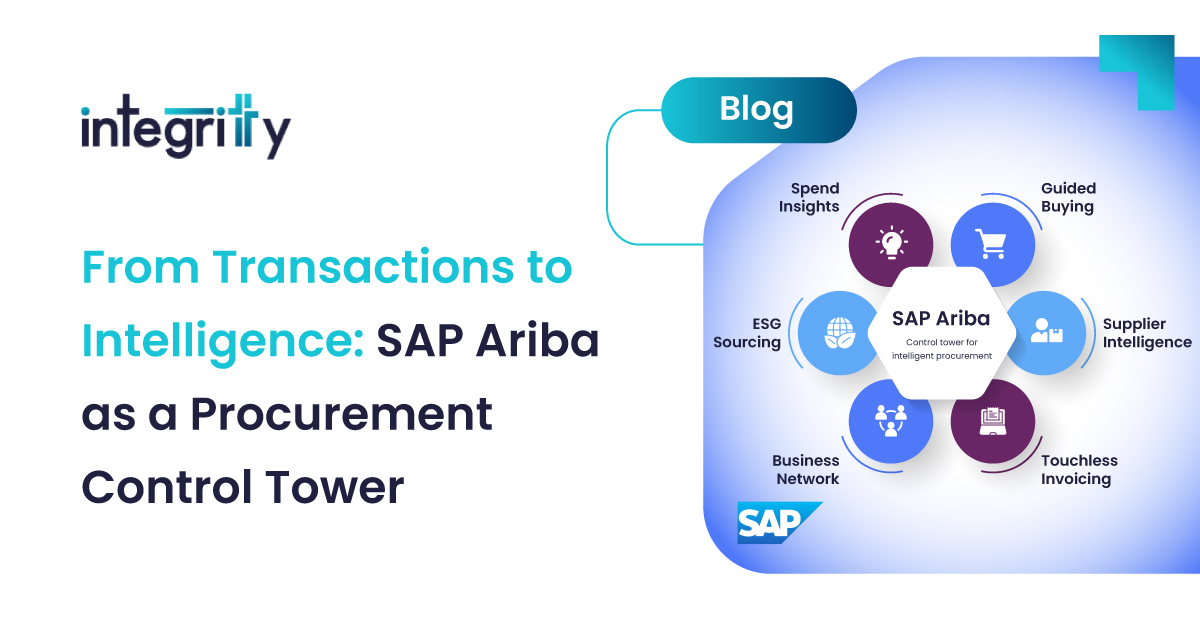
SAP Ariba emerges as a powerful digital backbone for healthcare procurement transformation. It also offers a cloud-based end-to-end procurement solution. It is built as a cloud-based procurement and supply chain solution to digitise and automate end-to-end sourcing and supplier management.
One of the powerful aspects of SAP Ariba is its global supplier network. Healthcare organisations can access a pool of pre-qualified suppliers. Equally important is its ability to standardise procurement processes. By replacing workflows with automated rule-based systems, SAP Ariba ensures consistency, compliance and speed.
How SAP Ariba Modernises Healthcare Procurement
This cloud software solution by SAP provides procurement and supplier management services, optimising procurement processes digitally. By using SAP Ariba, public healthcare institutions get a more intelligent procurement process, which is connected, collaborative, transparent, efficient, and compliant.
1. Automated Source-to-Pay Process
SAP Ariba streamlines and automates procurement processes, starting from sourcing and contract creation and ending with purchase orders, invoices, and payment transactions. Such automation allows focusing on other areas that require more attention and effort from procurement professionals.
- Reduce procurement cycle times
- Get rid of manual paperwork
- Approvals will be faster
- Increase purchasing accuracy
- Boost efficiency
2. Increased Spend Visibility and Cost Control
The greatest strength of SAP Ariba software is its capability to provide real-time spend visibility. It allows making better decisions about costs and saving money for healthcare institutions by providing procurement analytics.
- Understand spending patterns
- Evaluate supplier performance
- Identify usage of contracts
- See procurement bottlenecks
- Optimise budgets
3. Smarter Supplier Management
Supplier management is critical for healthcare institutions since the performance of suppliers may significantly impact patient care. Public healthcare organisations can use this software to develop a robust supplier network that would be able to react promptly during any kind of emergency or health crisis.
- Evaluate supplier performance
- Streamline supplier onboarding
- Assess supplier risks
- Foster supplier collaboration
- Verify supplier compliance
4. Higher Transparency and Compliance
Public procurement always implies following various regulations, guidelines, and policies. All of these issues can be easily solved by using the SAP Ariba system.
- Centralise procurement data
- Generate audit trails
- Streamline approval processes
- Manage documentation in the digital environment
- Automate policy enforcement
5. Fast Emergency Procurement Responses
Healthcare procurement should be flexible to quickly react during any health-related emergency situations or pandemics.
- Conduct faster sourcing events
- Communicate more quickly with suppliers
- Get real-time inventory visibility
- Speed up procurement approvals
- Coordinate procurement activities
Integritty’s Approach: Enabling Clean, Scalable Transformation
Integritty brings a core AI-driven approach to SAP Ariba implementation. They ensure that public healthcare organisations achieve value without overcomplicating their systems. They enhance these capabilities with automation and seamless integrations.
Key Transformation Pillars in Public Healthcare Procurement
- Digital Sourcing and Tender Management
- Supplier Lifecycle and Performance Management
- Intelligent Invoice Processing and Automation
- Spend on Visibility and Analytics
- Compliance and Audit Readiness

The Role of AI in Modern Healthcare Procurement
Artificial Intelligence is increasingly becoming an enabler in procurement transformation. As the procurement environment becomes more complex, healthcare organisations are adopting AI to improve efficiency, visibility and supply chain resilience. When combined with SAP Ariba, AI introduces a level of intelligence and efficiency.
AI-powered analytics can predict demand patterns. Machine learning algorithms can identify anomalies in spending or supplier behaviour.
Predictive demand forecasting:
This is one of the biggest challenges in healthcare procurement is accurately forecasting demand for medicines and medical consumables. The predictive demand forecasting helps healthcare organizations to enable procurement teams for more informed purchasing decisions.
This helps the organisations to:
- Reduce stock shortages
- Avoid over-purchasing
- Improve inventory planning
- Optimise procurement schedules
- Strengthen supply continuity
Business Impact: Measurable Outcomes in Healthcare
The transformation of healthcare procurement through SAP Ariba delivers tangible, measurable benefits.
- Faster Procurement Cycles
- Supplier Collaboration
- Improved Compliance and Transparency
- Cost Optimisation
- Operational Efficiency
Most importantly, these improvements translate into better patient care. Timely availability of supplies ensures that healthcare providers can deliver uninterrupted services.

Real-World Relevance: Why This Transformation Matters Now
The global healthcare landscape has changed. Events such as pandemics have exposed vulnerabilities in supply chains. Public healthcare organisations can no longer rely on processes. They need intelligent systems that can adapt to changing demand. Digital procurement platforms like SAP Ariba provide the tools needed to build resilience.
Building a Future-Ready Healthcare Procurement Ecosystem
The transformation of public healthcare procurement is not about adopting new technology. It is about reimagining how procurement contributes to healthcare delivery. With SAP Ariba as the backbone and Integritty’s clean AI-driven implementation approach healthcare organisations can move from reactive, manual processes to proactive intelligent systems.
This shift enables procurement, better cost management and stronger supplier relationships. Ultimately the impact goes beyond efficiency.
It touches the core mission of healthcare: delivering timely high-quality care to patients.
The future of healthcare procurement lies in connected and transparent ecosystems. And, for organisations ready to embrace this future the journey begins with the strategy, the right technology and the right partner: Integritty.