
Implementation delivers a system; support delivers sustained business value.
Ongoing support mitigates operational, compliance, and integration risks across payroll, finance, identity management, timekeeping, and third-party HR applications.
Regular release management by dedicated support is essential to safely evaluate and adopt SAP’s biannual updates and new capabilities.
A structured support model provides monitoring, optimization, security reviews, reporting enhancements, training, and continuous improvement to maximize return on investment.
Ask an HR leader how their job has changed, and you get the same answer: it keeps getting bigger. A team that once managed records and fielded requests is now expected to forecast workforce needs, close skills gaps, keep the organization compliant, and improve the employee experience — usually without a bigger team.
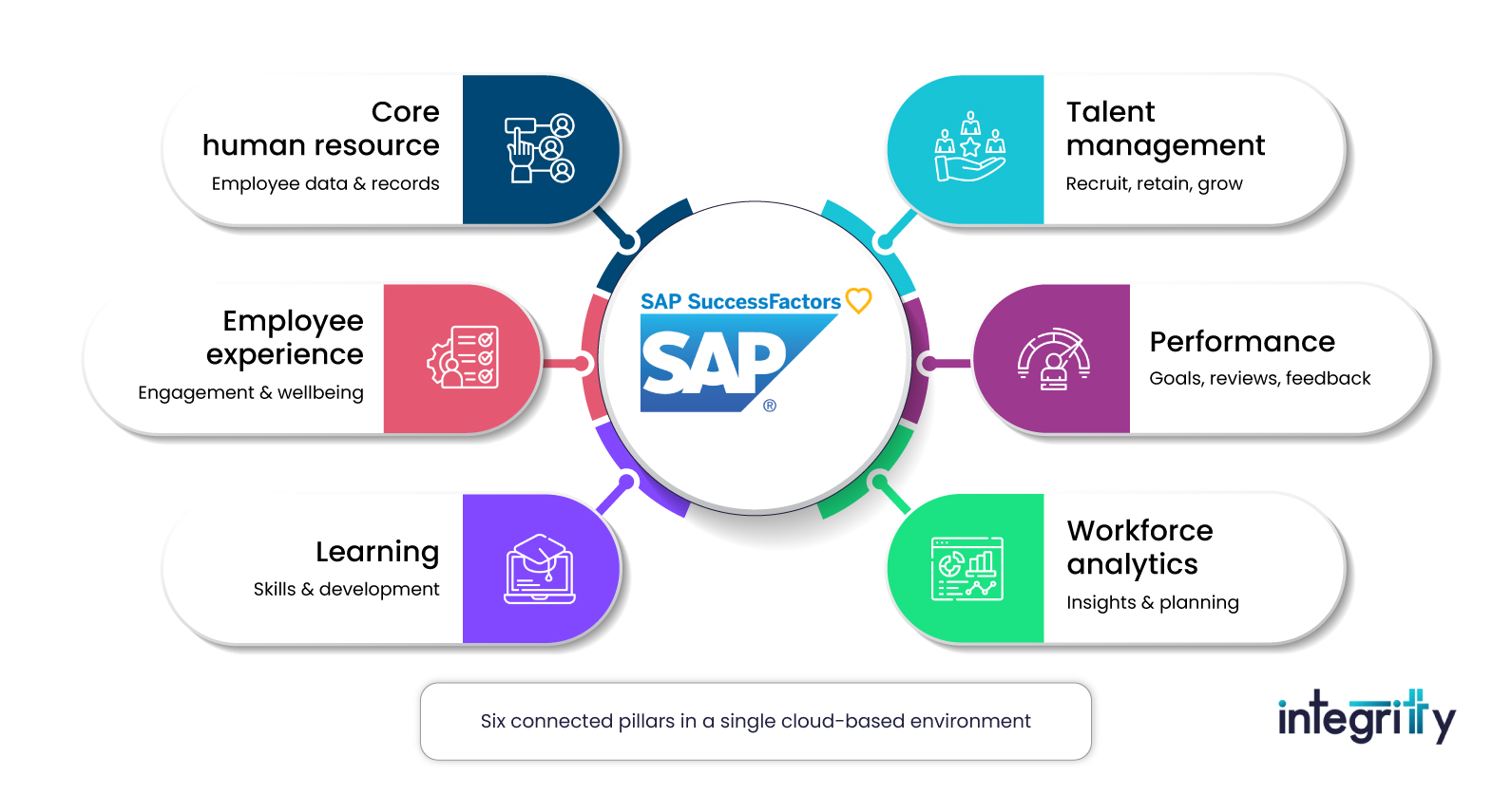
That pressure is a big reason SAP SuccessFactors anchors so many HR transformations, pulling core HR, talent, learning, performance, analytics, and employee experience into one cloud platform, so people data lives in one place instead of five.
But here’s what the implementation plan rarely says: standing the platform up is the milestone everyone celebrates — and the easiest to mistake as reaching “the destination”. The overall value doesn’t show up at go-live; it builds afterward, and only if someone tends to the system as the business keeps moving underneath it.
Go-live isn't the finish line
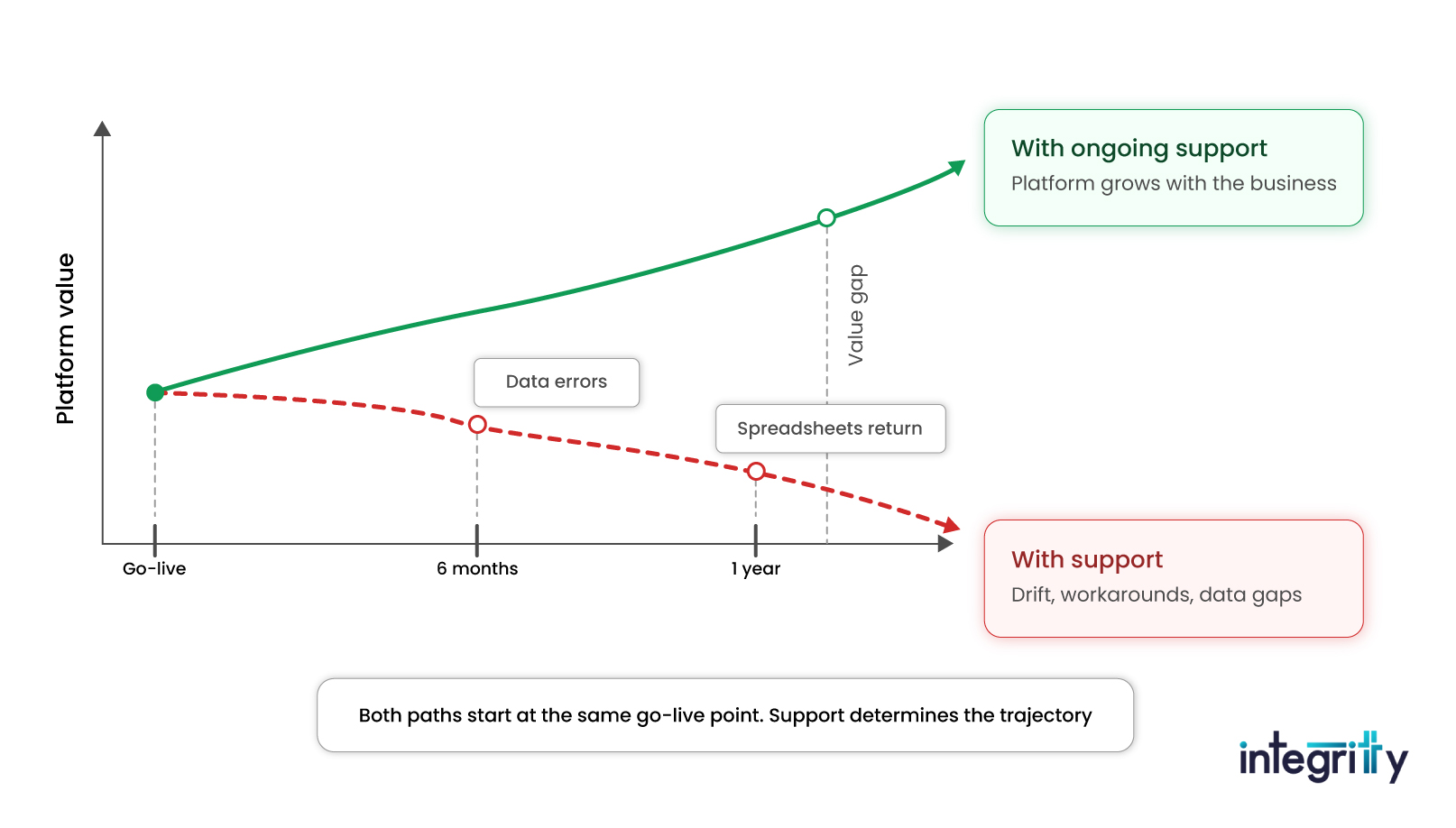
A solid implementation takes planning, testing, and change management. Then the business carries on changing, growing (or shrinking). Policies get rewritten, teams reorganize, regulations shift. SAP ships its twice-yearly releases. None of it checks whether your setup still fits — the platform you went live on is no longer the one you’ll run six months from now.
When nobody minds that gap, problems creep rather than announce themselves. A workflow that fits at launch drifts from how the team actually works. An S/4HANA or payroll integration throws small errors that go unnoticed until reconciliation week. Someone rebuilds a process in a spreadsheet “just for now,” and the platform becomes a system of record no one fully trusts.
None of these failures are dramatic alone, which is exactly what makes them dangerous. Ongoing support catches the drift early — it’s less a safety net, rather, a way to protect an investment you’ve already made.
What ongoing support buys you
Support gets filed under “maintenance,” which undersells it. The real work is keeping the platform stable, trusted, and useful as the organization evolves. It means fewer surprises for HR, a system employees stop dreading, and many leaders can trust. A structured support model does that quietly — handling configuration changes, watching integrations, preparing for SAP releases, sharpening reporting, and bringing new capabilities online without disrupting day-to-day HR.
Keeping HR operations steady
HR systems sit underneath the moments that matter most: getting hired, changing roles, being reviewed, getting paid, and moving on. When one of those breaks, nobody has to be told — people feel it immediately.
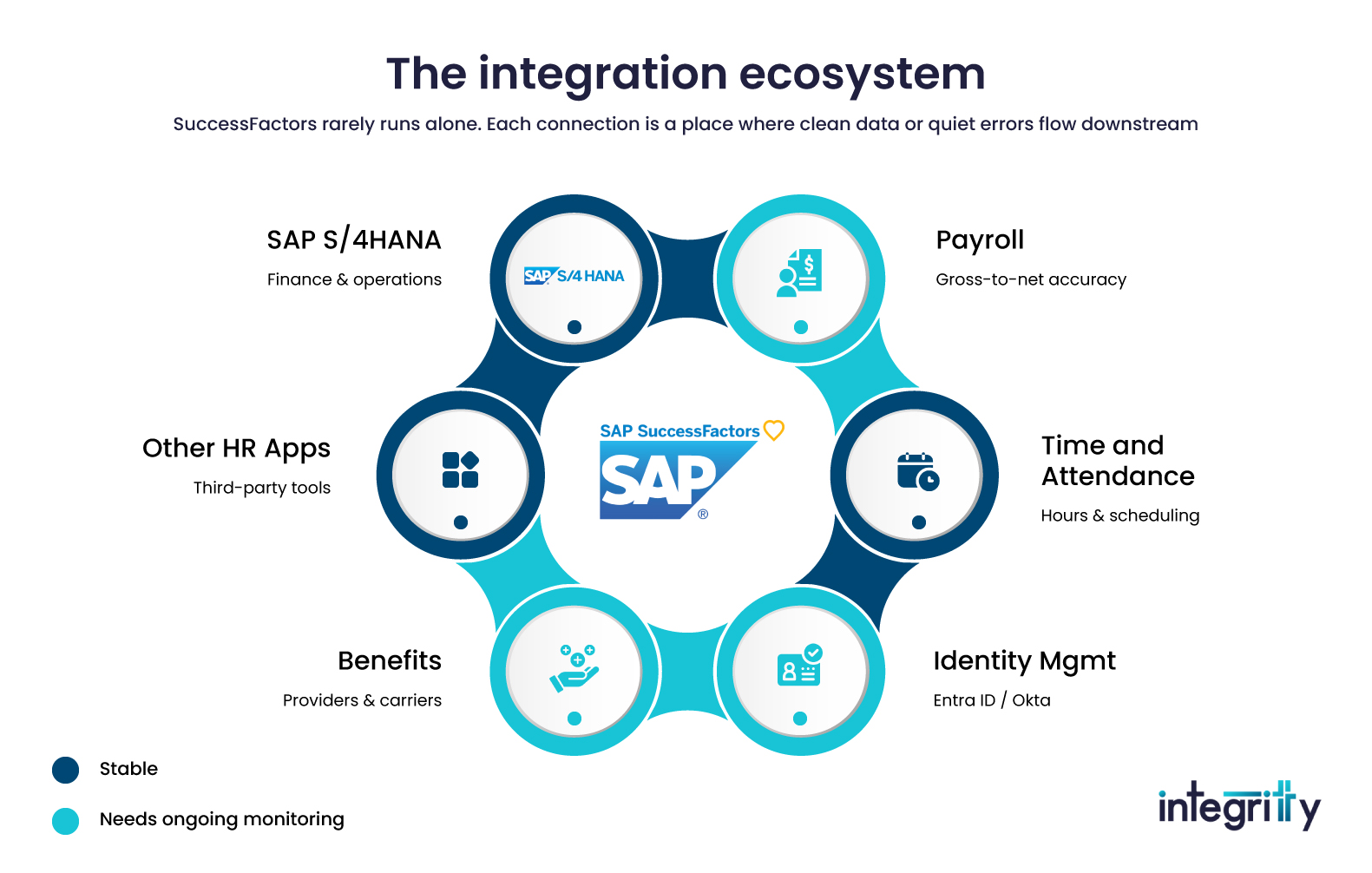
The stakes climb once SuccessFactors is wired into the enterprise; once one misconfigured connection pushes bad data downstream without anyone noticing. Continuous monitoring contains that risk while it’s still small. The connection points that need the most attention usually include:
- SAP S/4HANA, for finance and operations data
- Payroll engines, where gross-to-net accuracy depends on clean HR data
- Time and attendance platforms
- Identity tools such as Microsoft Entra ID or Okta
- Benefits providers and other third-party HR applications
Keeping pace with SAP's releases
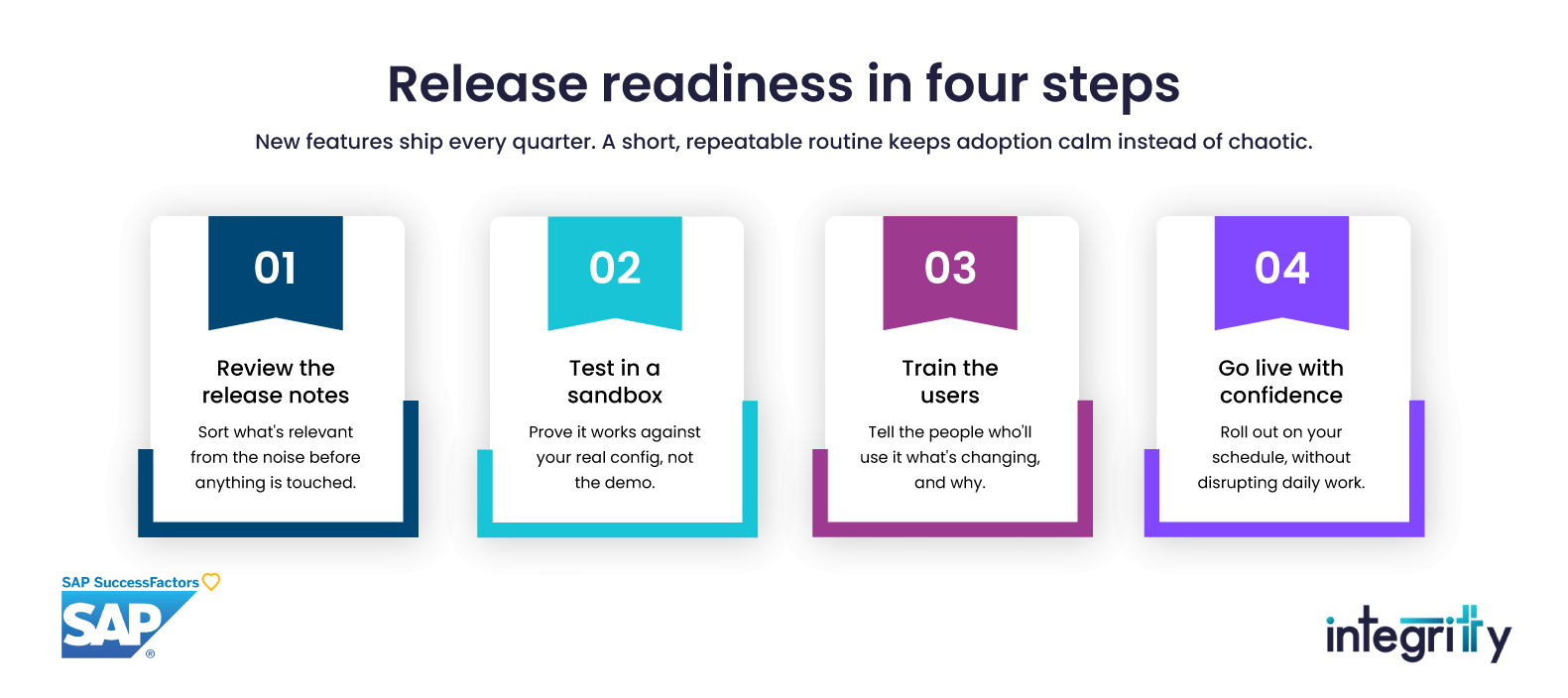
SuccessFactors doesn’t stand still. SAP delivers two major releases a year across Employee Central, Talent, Learning, Workforce Analytics, and more, with non-disruptive fixes in between. A lot of it is useful; none of it should be switched on by reflex.
Before turning on anything new, you should question: Has it been tested in a sandbox? Does it disrupt a process people rely on? Does it answer a real need, or just one you noticed exists? This is where ongoing support earns its keep: a good partner reads the release notes early, separates signal from noise, and plans a rollout that lands without disruption.
AI is only as good as what you feed it
AI is showing up across SuccessFactors — in learning recommendations, talent insights, workforce planning, and the agentic copilot tools managers access. Used well, AI takes real work off people’s plates. But it inherits the data and governance behind it, and that’s where most rollouts go sideways.
Before flipping on AI features, leaders need answers to three questions: Where does it add value, and where is human judgment still required? Is the underlying data clean enough to trust the output? Are employees and managers prepared to question what it recommends? Skip that work, and you don’t just make bad recommendations — you erode trust in the platform, which is hard to win back. Ongoing support puts data integrity, governance, and enablement in place first, so AI switches on into a system that can support it.
Get your team engaged in the solution
A platform can be configured beautifully and still fall flat if people don’t use it with confidence. The gaps that surface after go-live are predictable: employees can’t finish a self-service task, managers are stuck in an approval flow, administrators are unsure how a feature works, and leaders unsure if a report is right.
These aren’t edge cases — they’re the ordinary friction that bleeds value one frustrated user at a time, and almost all of it is preventable. Ongoing support chips away at it with targeted training, plain-language guidance, and steady process refinement. When self-service works the way people expect, they stop routing everything through HR by email — and HR gets that time back.
Compliance, security, and trusted data
HR holds some of the most sensitive information in the company, so security, access, and data governance aren’t nice-to-haves — they’re the floor. Ongoing support watches the areas most likely to become a problem:
- permissions reviewed so no one accumulates more access than they should
- configurations monitored so nothing drifts outside the policy
- audit trails kept current
- workforce data kept clean across every population
This matters most for organizations juggling multiple legal entities, international workforces, or complex regulatory environments. When the data is trustworthy and permissions are managed properly, both the business and its people are better protected.
How Integritty can help
At Integritty, SuccessFactors support isn’t about closing tickets. It’s about helping HR teams keep getting value from a platform they’ve already paid for. Our support and managed services help organizations stabilize, optimize, and keep evolving their HR environment long after go-live — in practice:
- System health monitoring and proactive issue resolution
- Release readiness across SAP’s bi-annual updates
- Configuration improvements that keep pace with the business
- Integration oversight across S/4HANA and third-party systems
- Reporting and analytics enhancements
- User enablement, training, and adoption support
- Security reviews and role-based permission audits
- Process optimization for ongoing HR efficiency
Whether you run Employee Central, Recruiting, Onboarding, Learning, Performance & Goals, Compensation, Succession, Workforce Analytics, or a web of integrations across SAP and beyond, ongoing support is what keeps your solution delivering its intended value.
The bottom line
SuccessFactors is a strong platform, but the full return arrives after implementation — through steady, deliberate support that keeps it aligned with a business that never stops changing. The aim was never to take the human out of Human Resources; it’s to give the team better tools and more time for people and strategy. In 2026, HR teams don’t just need a platform that works — they need a platform that keeps getting better, and the right support partner is what turns SuccessFactors from an HR system into an organizational foundation for people success.
Ready to get more out of your SAP SuccessFactors investment? Let’s talk. Contact us