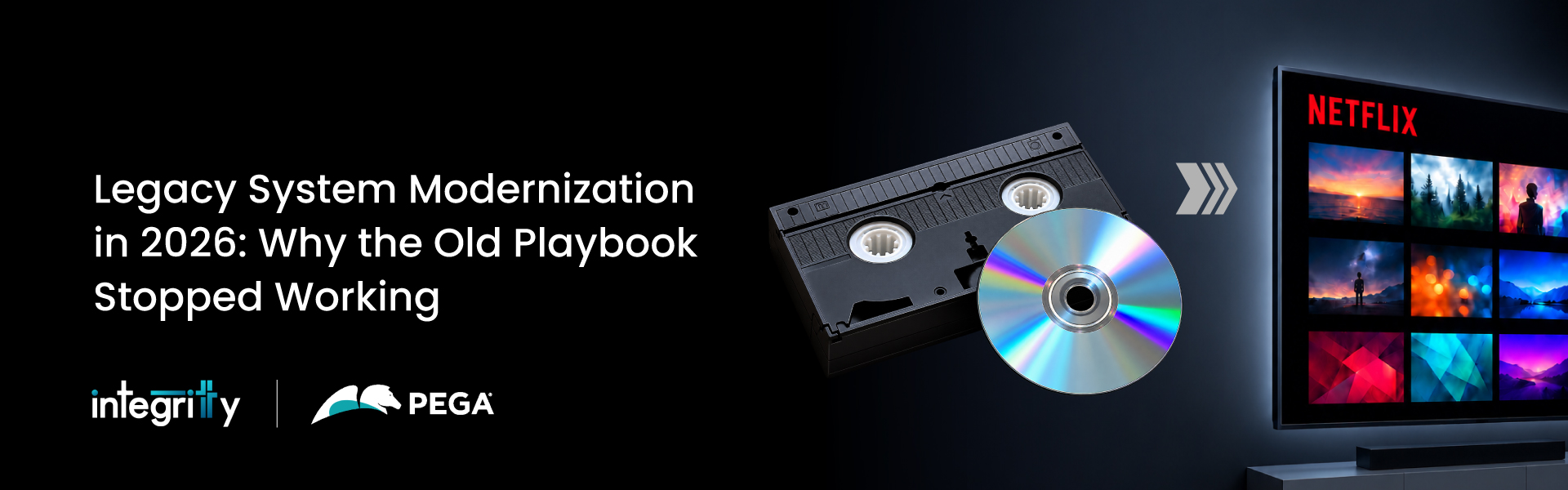
Legacy System Modernization in 2026: Why the Old Playbook Stopped Working
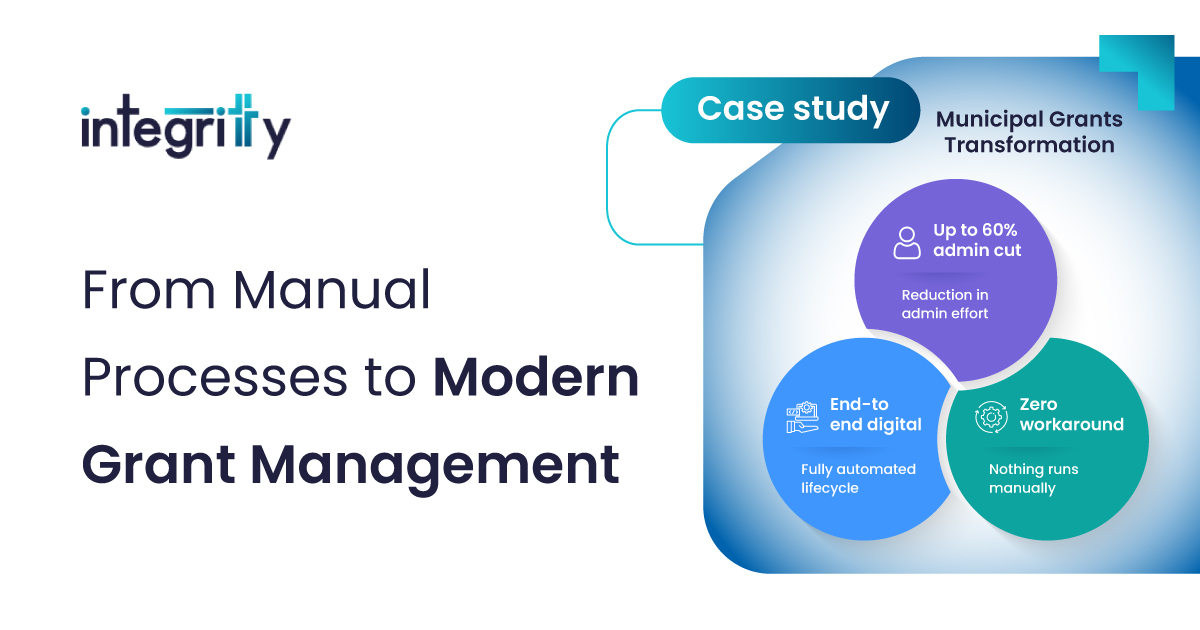
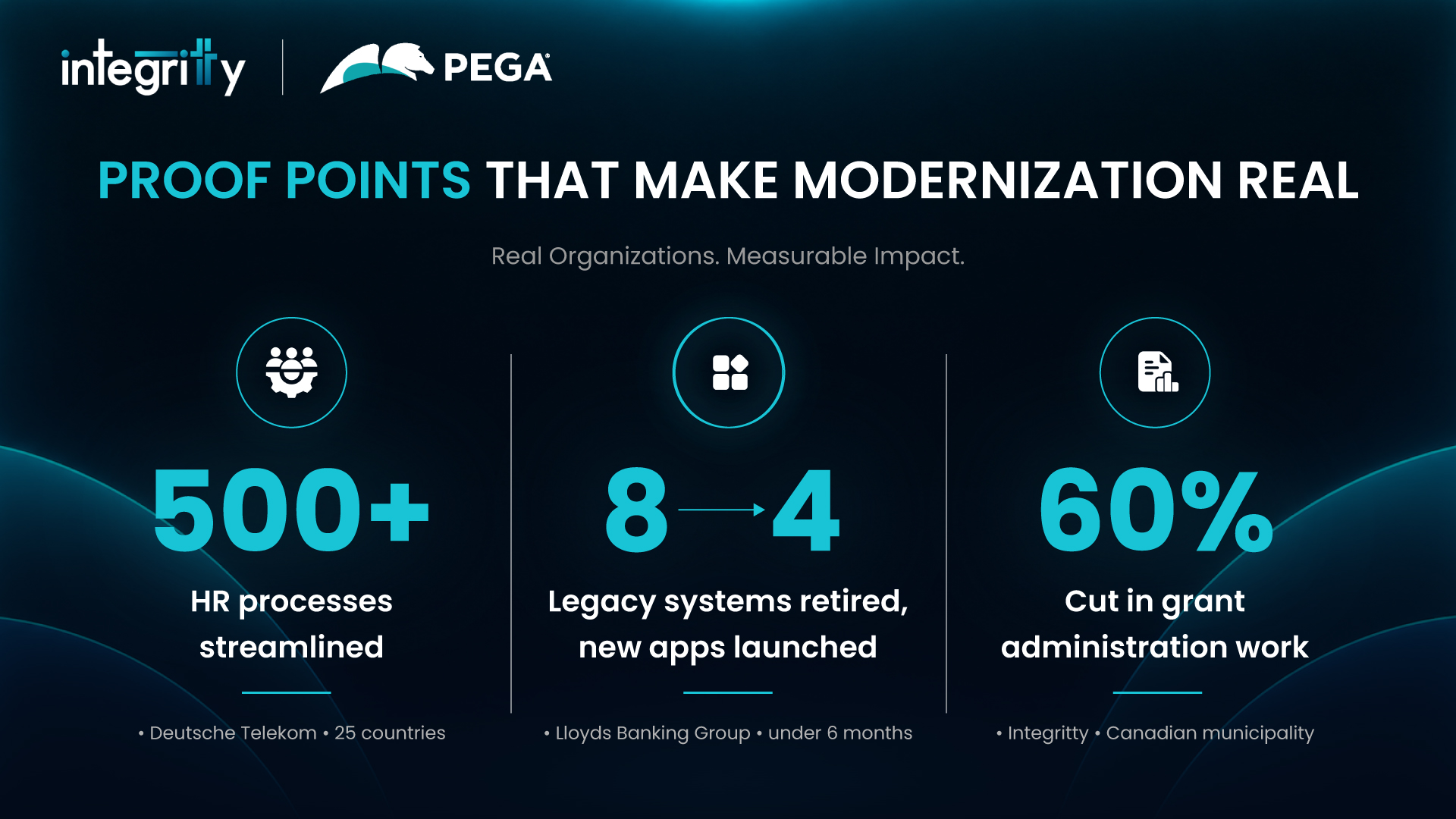
TL;DR: Legacy modernization isn’t optional anymore, and the old approach, a multi-year, big-bang rewrite, has largely fallen out of favor. In 2026, organizations are combining AI-accelerated discovery with an iterative, workflow-first approach that keeps the business running while the old system gets replaced underneath it. Pega’s platform, especially its GenAI Blueprint and new AWS Transform integration, has become one of the more credible ways to do this without a multi-year blackout. Integritty pairs that technology with the assessment, governance, and delivery discipline it takes to actually land the transformation, something we’ve done for clients well beyond the Pega space, including a Canadian municipality where we cut grant administration work by up to 60%.
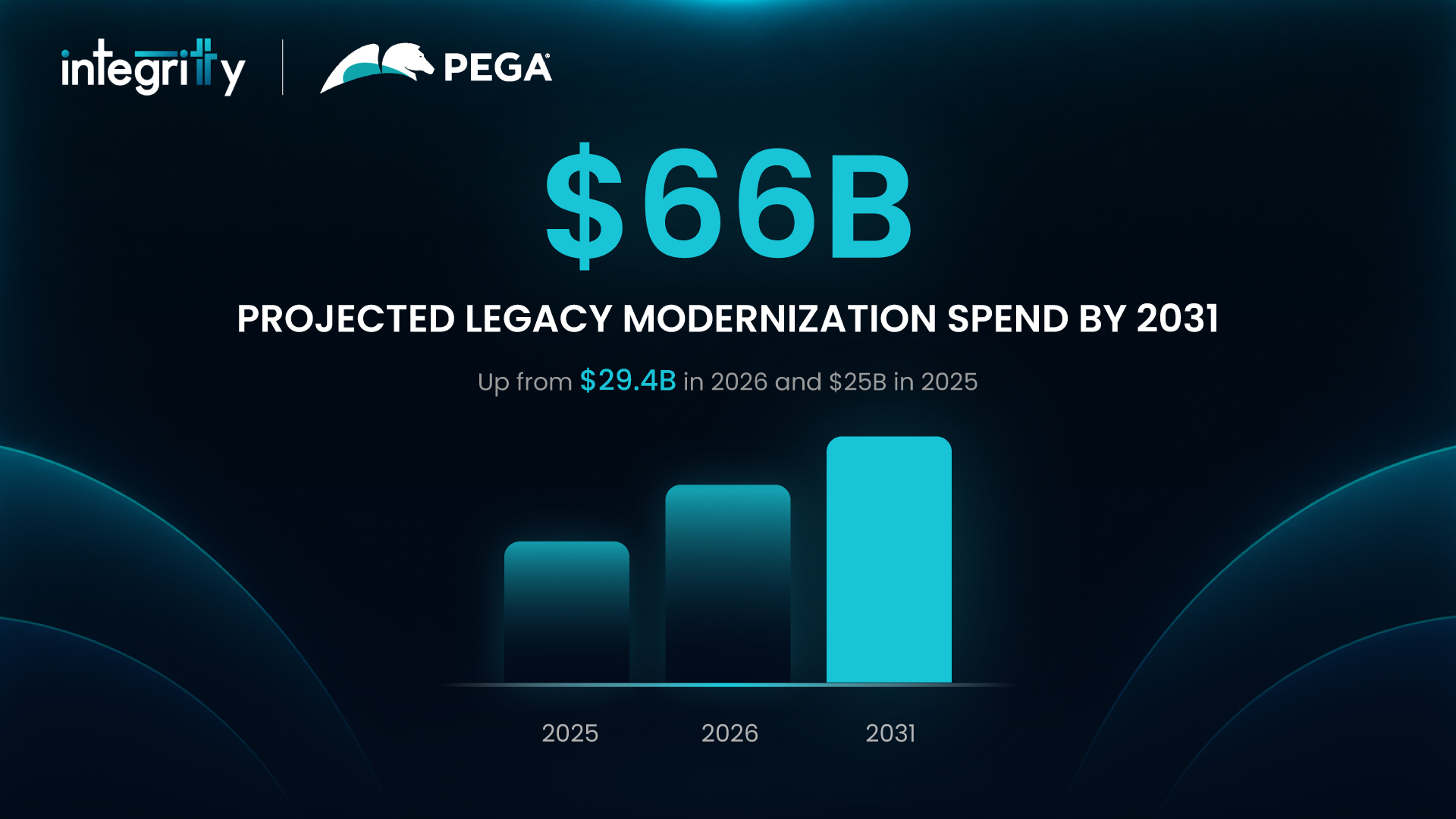
Legacy modernization has been on the CIO agenda for years, but 2026 feels different. The market itself reflects it: analysts at Mordor Intelligence put global legacy modernization spend at roughly $29.4 billion this year, up from about $25 billion in 2025, and headed toward $66 billion by 2031. That’s not incremental growth. That’s an industry admitting it’s been putting off something expensive for a long time.
Three Forces Are Colliding at Once
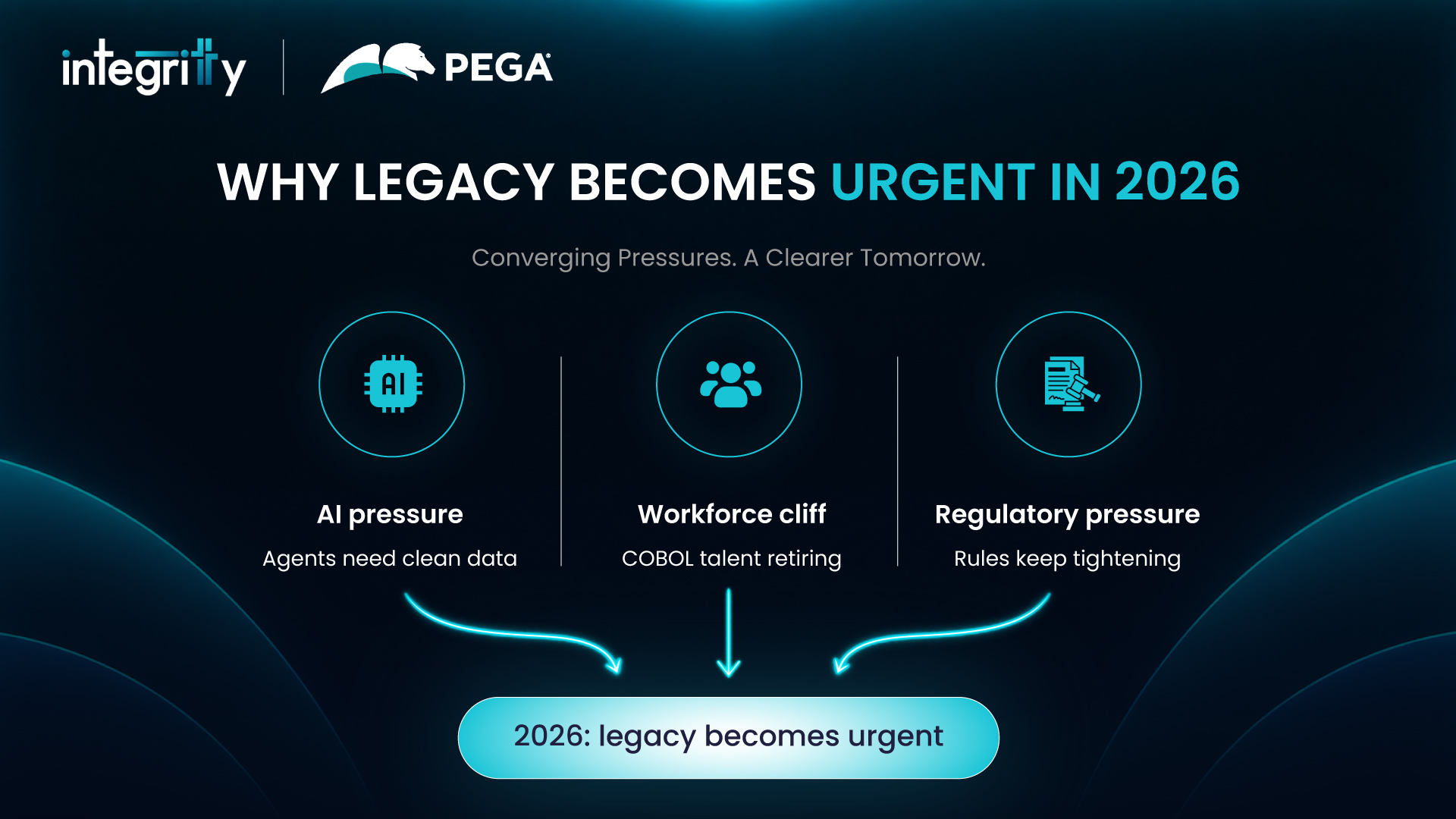
What’s pushing this now isn’t one trend; it’s three landing together.
The first is AI. Every AI initiative an enterprise wants to run eventually hits the same wall: the data and logic it needs are locked inside systems that were never built to expose either. An AI agent can’t act on a process it can’t see, and most legacy systems weren’t designed with an API in mind, let alone a model calling one.
The second is a workforce problem that’s been building for decades and is now unavoidable. Roughly 220 billion lines of COBOL are still running in production somewhere, and the average COBOL developer is about 55 years old, with something like 10% of that talent pool retiring every year. That math doesn’t need much explaining.
The third is regulatory. Compliance frameworks keep tightening around data access, auditability, and security, requirements that decades-old architecture simply wasn’t designed to meet, no matter how many patches get layered on top.
Rip-and-Replace Is Mostly Dead
For a long time, “modernization” meant picking a hard cutover date, rebuilding everything from scratch, and hoping the new system worked as well as the old one on day one. That approach has taken a real reputational hit. Big-bang rewrites tend to sprawl into multi-year programs with fuzzy milestones; business teams wait too long to see anything, and by the time the new system is ready, the requirements have usually moved anyway.
What’s replaced it is a more iterative model, and AI is a big reason it’s finally practical. Tools can now scan a legacy codebase, map its dependencies, and generate a first draft of the business logic in plain language, work that used to take a discovery team months to do by hand. That doesn’t remove the need for judgment. It does mean the expensive, tedious part of modernization is figuring out what the old system actually does, no longer has to be the bottleneck it once was.
Where Pega Fits into This
Pega’s angle on modernization isn’t primarily about writing better code faster. It’s about pulling business logic out of legacy code entirely and re-expressing it as a governed, visual workflow that both the business and IT can actually read.
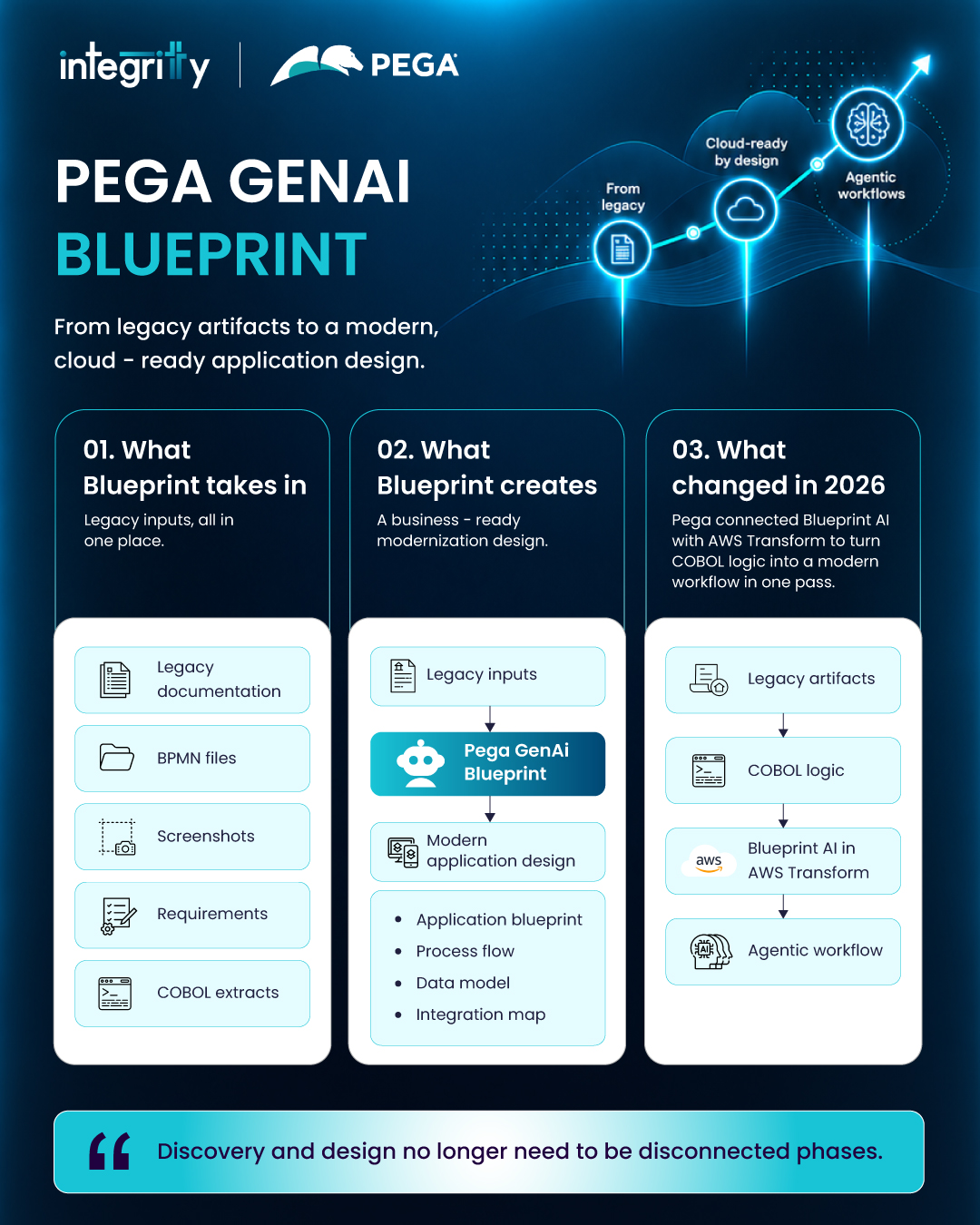
Pega GenAI Blueprint is the clearest example. Feed it legacy documentation, BPMN files, screenshots, even old requirements documents, and it generates a modernized, cloud-ready application design, one that a business analyst can review and adjust without needing to read a line of the original code. At PegaWorld in June 2026, Pega extended this further by integrating Blueprint AI directly into AWS Transform, so organizations can pull COBOL logic straight off a mainframe and have Blueprint reimagine it as a modern, agentic workflow in one pass, instead of running discovery and design as separate, disconnected phases.
The results other organizations have gotten aren’t small. Deutsche Telekom used Blueprint to streamline more than 500 HR processes across 25 countries. Lloyds Banking Group retired eight legacy systems and launched four new applications in under six months. Neither of those happened because of clever code; they happened because the underlying process finally got standardized and made visible.
Choosing the Right Approach — Not Just One
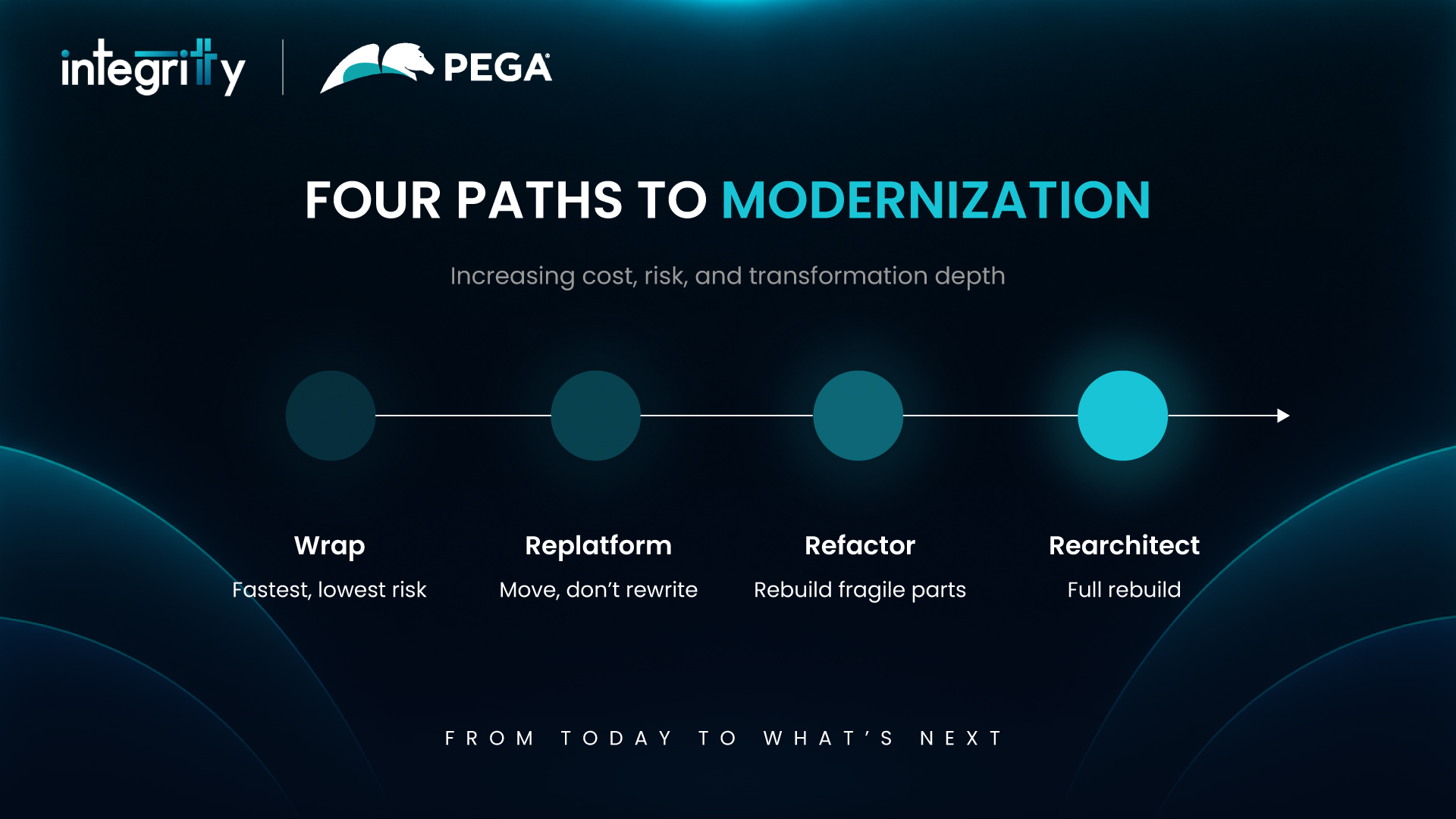
In practice, most 2026 modernization programs aren’t picking a single strategy; they’re sequencing a few:
- Wrap it first. Put a modern API and workflow layer around the legacy system so it can start talking to AI agents and new interfaces immediately, without touching the core. This is essentially the Strangler Fig pattern: new functionality grows up around the old system and gradually takes over, instead of replacing it in one move.
- Replatform what’s stable. Move working logic onto cloud-native infrastructure without a full rebuild.
- Refactor what’s fragile. Rebuild the pieces where technical debt has made changes genuinely risky.
- Rearchitect what’s fundamentally broken. Reserve a full rebuild for the systems where nothing short of that will actually fix the problem.
Where Integritty Comes In
Technology gets you part of the way. What actually determines whether a modernization program succeeds is less glamorous: an honest assessment of what’s really running underneath the covers, a roadmap sequenced by business priority instead of technical convenience, and someone accountable for keeping standardization and governance in place after go-live, not just during the project.
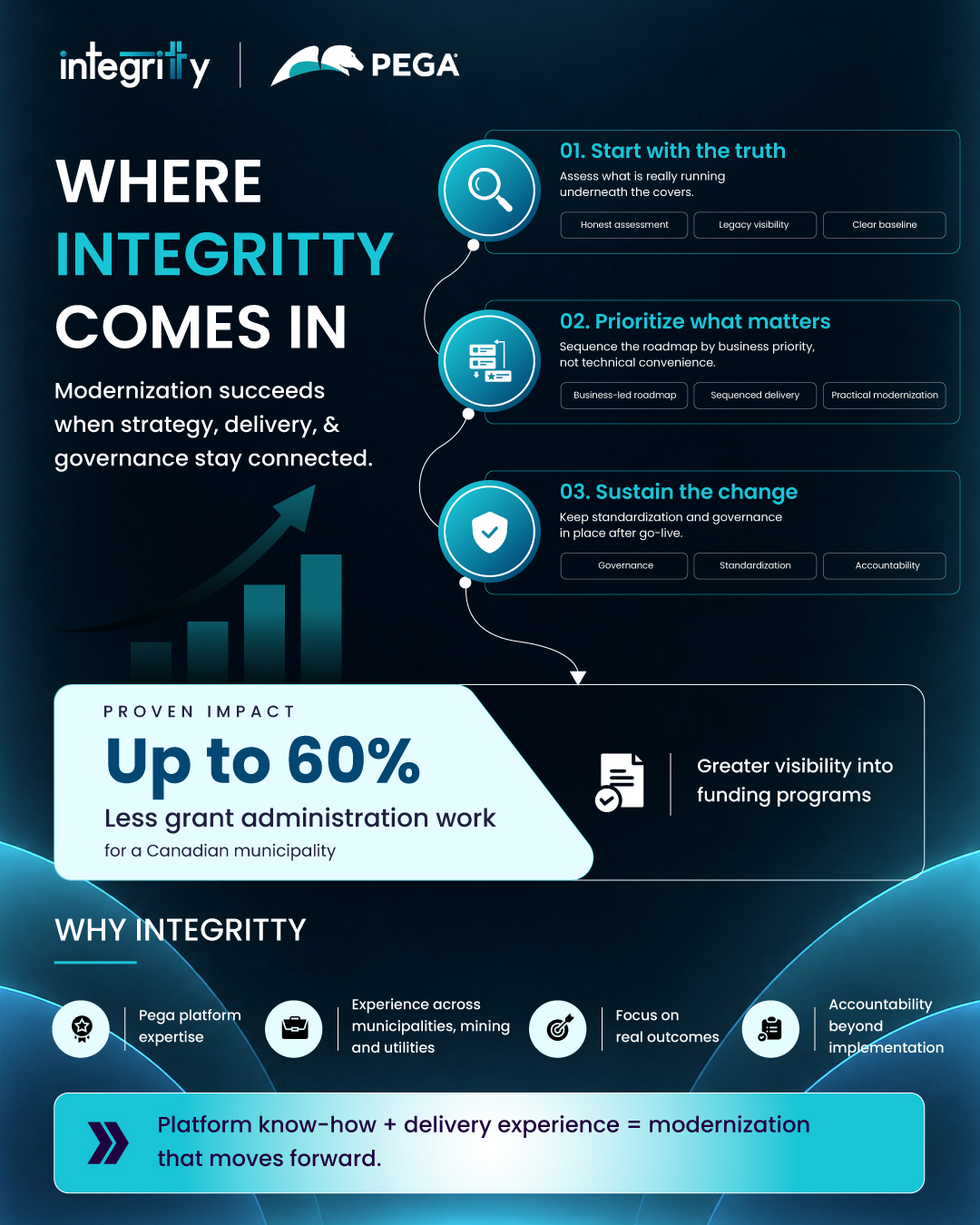
That’s the part of the work Integritty focuses on. As a Pega partner, we bring the platform expertise to design and build the modernized workflows. But a lot of our legacy modernization work sits outside Pega entirely; we’ve spent years helping municipalities, mining companies, and utilities move off aging, custom-built systems, including a recent engagement where we helped a Canadian municipality cut grant administration work by up to 60% and finally get visibility into how its funding programs actually run. That combination- deep platform know-how plus real delivery experience across legacy environments is usually the difference between a modernization program that ships and one that quietly stalls in year two.
If legacy systems are starting to hold your organization back, let’s talk about where a modernization roadmap should start. Reach out to Integritty to begin the conversation.