Key Takeaways
Procurement isn’t just back-office cost control anymore. It’s turning into a real lever for resilience and margin.
Next-gen SAP Ariba builds decision intelligence into the workflow itself, so it recommends suppliers, flags risk, and catches cost leakage as it happens.
Guided buying and continuous supplier intelligence swap manual enforcement for compliance that’s integrated from the start.
The SAP Business Network and touchless finance integration push that intelligence past your own four walls, and ESG is now built into sourcing decisions rather than added on afterward.
Integritty helps organizations put this into practice through a clean core strategy and AI-driven orchestration across SAP S/4HANA.
Ten years ago, procurement was where cost got managed after the fact. Today, it’s where risk gets caught before it becomes a problem, which is a bigger shift than it sounds.
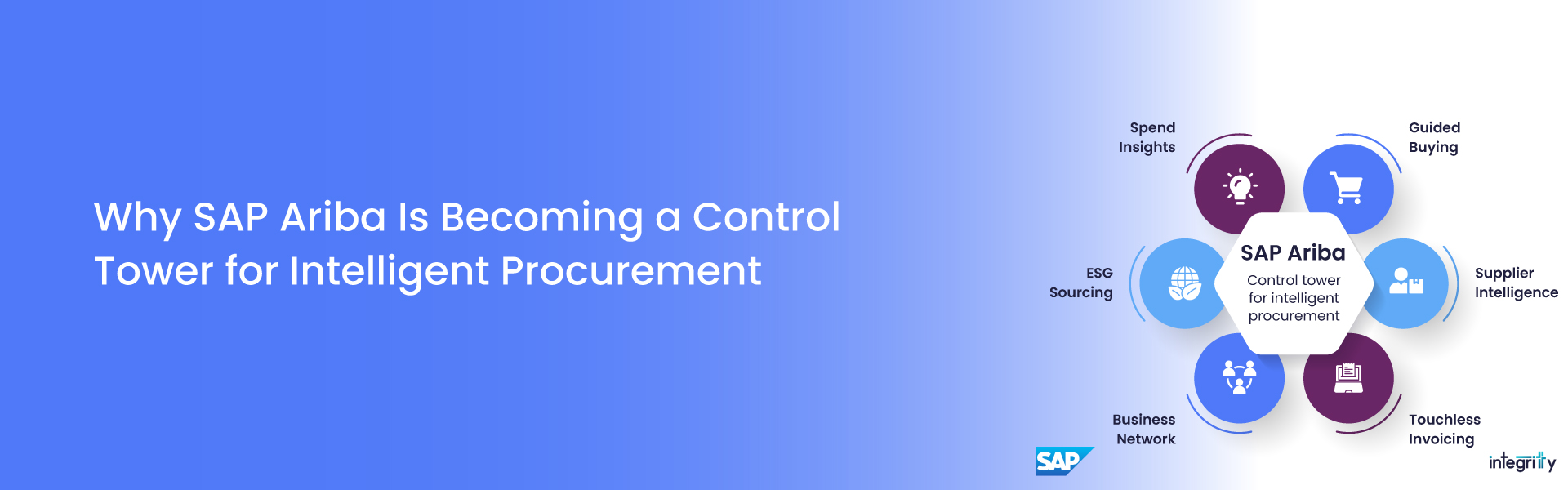
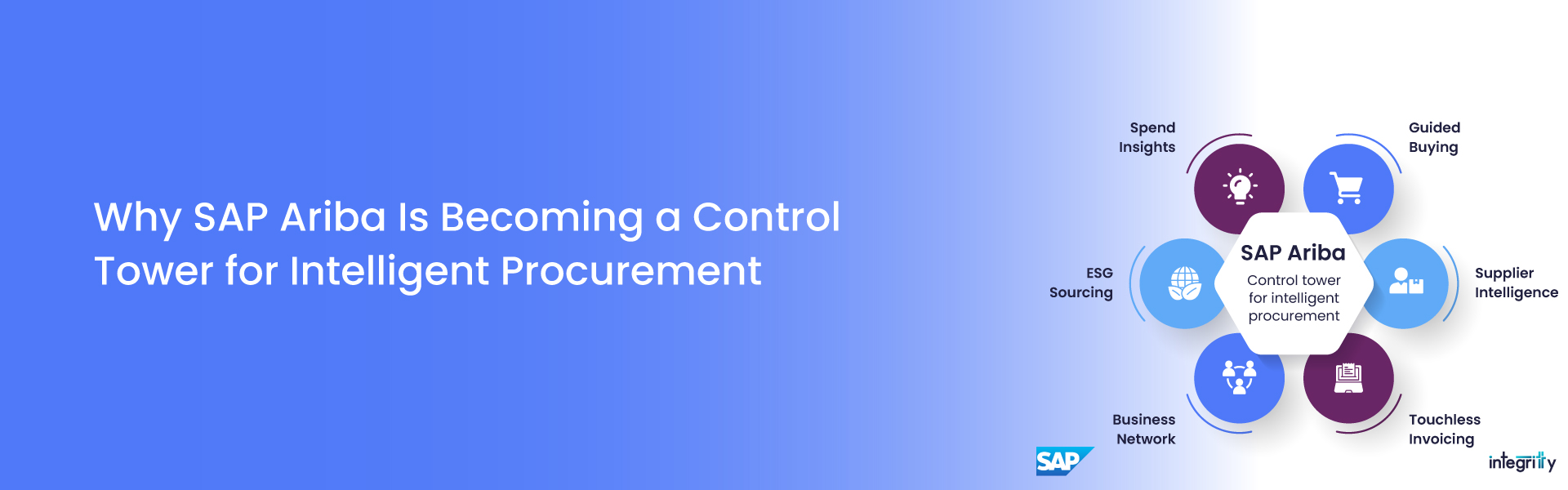
Supply volatility, inflation, and ESG pressure have pushed procurement out of the back office and into the center of how enterprises protect margin and stay resilient. SAP’s procurement ecosystem is moving with it; anchored by SAP Ariba and extended through the SAP Business Network, it’s edging away from simple process automation toward something closer to a real-time control tower.
This isn’t a feature update. It’s a different way of governing spend, managing suppliers, and reacting to risk as it happens, not after.
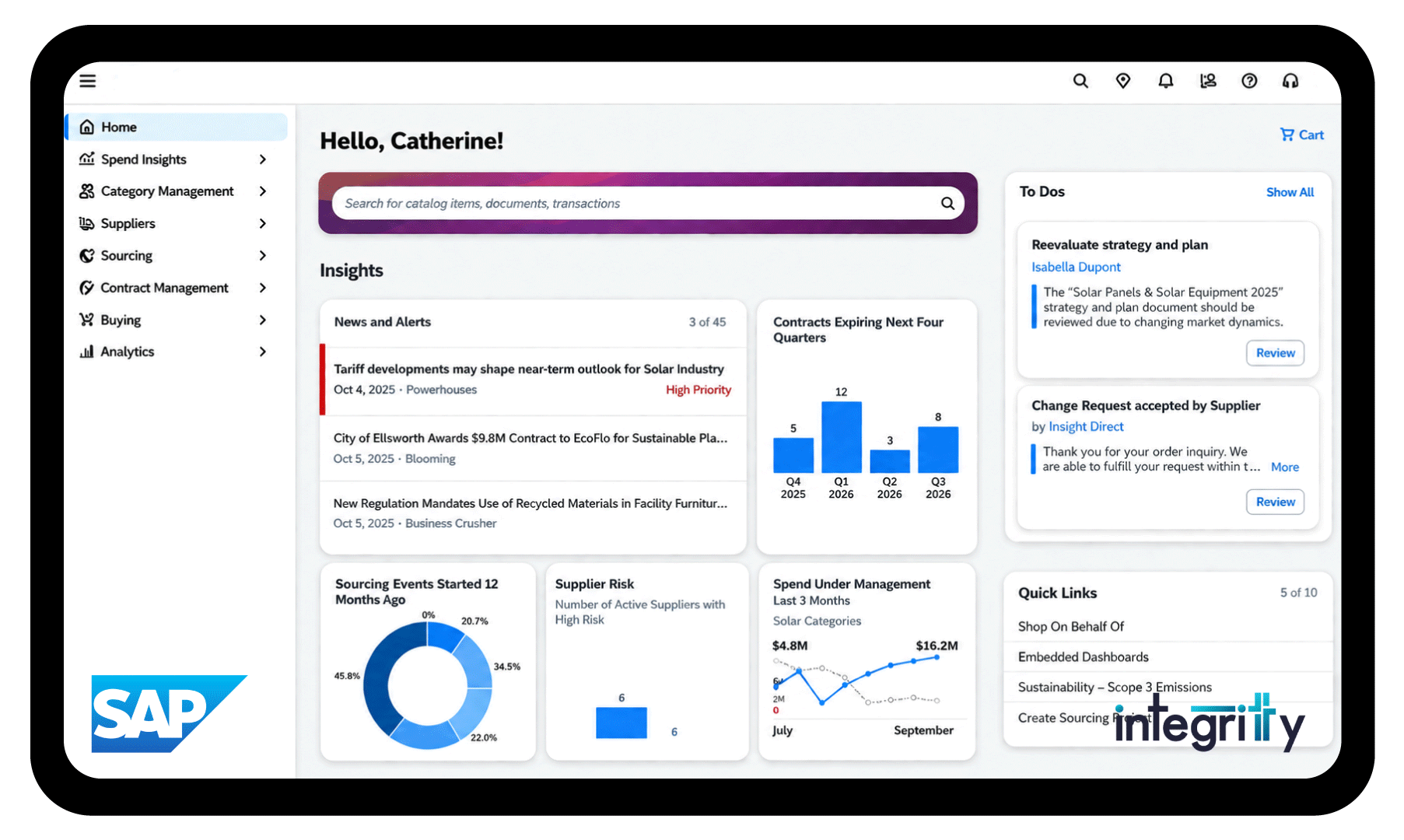
SAP Ariba’s insights dashboard surfaces alerts, supplier risk, and spend under management in one view.
From Digitizing Procurement to Guiding It
Earlier versions of SAP Ariba were built to digitize workflows: requisitions, approvals, sourcing events, invoice matching. That delivered efficiency, but the decisions themselves stayed human-driven and scattered across departments, which is often where problems occur.
That’s changing. The next generation pushes decision intelligence directly into the workflow, so the system isn’t only processing transactions, it’s actively shaping decisions by:
Recommending suppliers based on performance, risk, and compliance history
Spotting cost leakage patterns across categories and business units
Flagging sourcing decisions that might conflict with contracts or policy
In practice, procurement platforms are becoming less of a system of record and more of a system of guidance.
Guided buying is the clearest example of this in action: compliance used to mean audits and manual checks, someone verifying after the fact whether a purchase followed policy, which tends to create friction without preventing much. Next-gen SAP Ariba takes a different approach; instead of policing purchases after they happen, it shapes the buying experience so employees land on the compliant option by default:
- Preferred suppliers are built directly into the buying experience
- Category-specific catalogs cut down on off-contract purchases
- Policy constraints are enforced at the point of decision, not after the fact
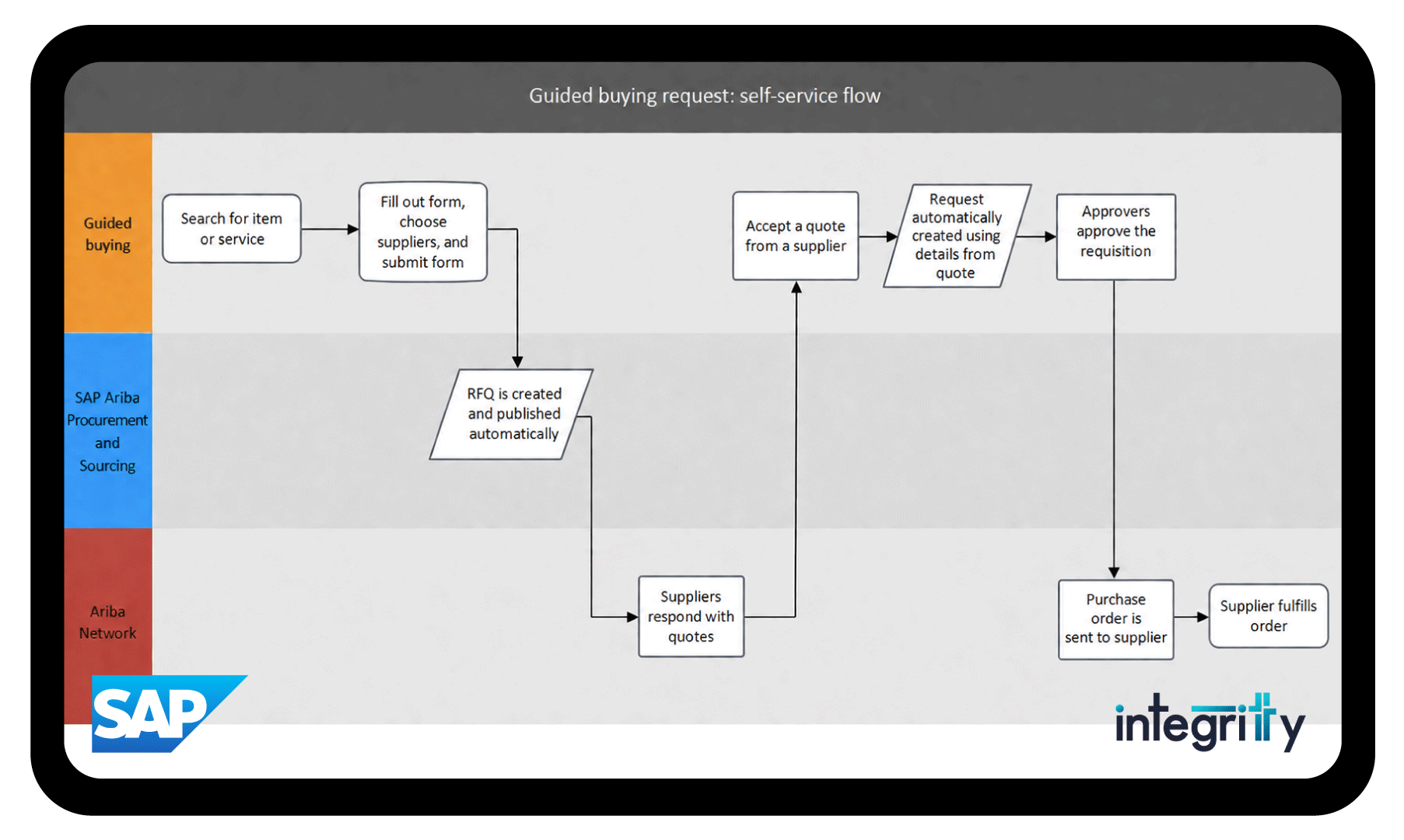
A typical guided buying flow: the request moves from self-service search through to automatic PO creation and fulfillment.
Less maverick spend isn’t the result of tighter restrictions, it’s the result of better defaults, and that distinction matters more than it sounds like it should.
From Once-a-Year Reviews to Continuous Supplier Intelligence
Supplier management used to run on a calendar: onboard, qualify, then check back in during the annual review. That cadence doesn’t hold up well when conditions can shift mid-quarter. SAP Ariba now supports continuous supplier intelligence instead, drawing on live transactional data, financial and operational risk signals, ESG and regulatory metrics, and network-level benchmarking, updated as things happen rather than once a year.
The scorecard hasn’t disappeared, but it’s no longer static. Supplier profiles shift with every transaction, giving procurement teams a real chance to catch disruptions early instead of learning about them after the damage is done.
The SAP Business Network Effect: Ecosystem-Scale Visibility
Part of what makes this possible is scale. The SAP Business Network connects millions of trading partners, so procurement intelligence no longer stops at the edge of a company’s own ERP data. That opens up cross-industry benchmarking, faster access to backup suppliers when something breaks, and a broader read on how supply chains are behaving overall.
That’s the network effect at work: procurement stops being purely company-centric and starts operating with real awareness of the ecosystem it sits inside.
A related shift is the move toward touchless procurement and finance integration. Within modern SAP Ariba environments, more of the routine work is being automated, from invoice intake through AI-driven validation and matching, compliance checks, automated approvals, and real-time posting to SAP S/4HANA.
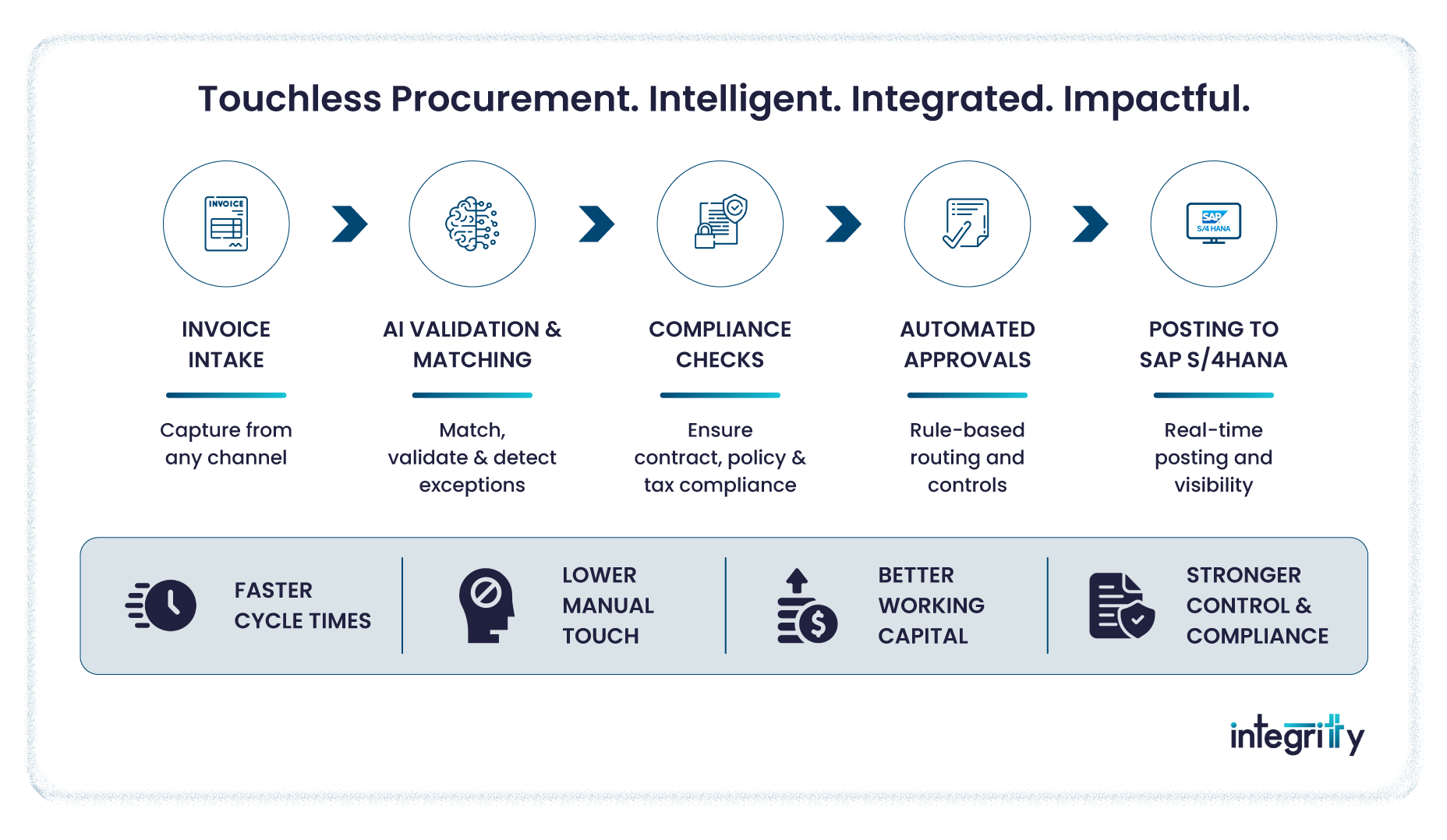
Touchless procurement in action: from invoice intake to automated posting in SAP S/4HANA.
Paired with SAP S/4HANA, this tends to mean faster cycle times and stronger working capital efficiency. But automation isn’t the end goal on its own, it’s about freeing people up to focus on the exceptions that genuinely need human judgment.
ESG Becomes a Core Procurement Constraint
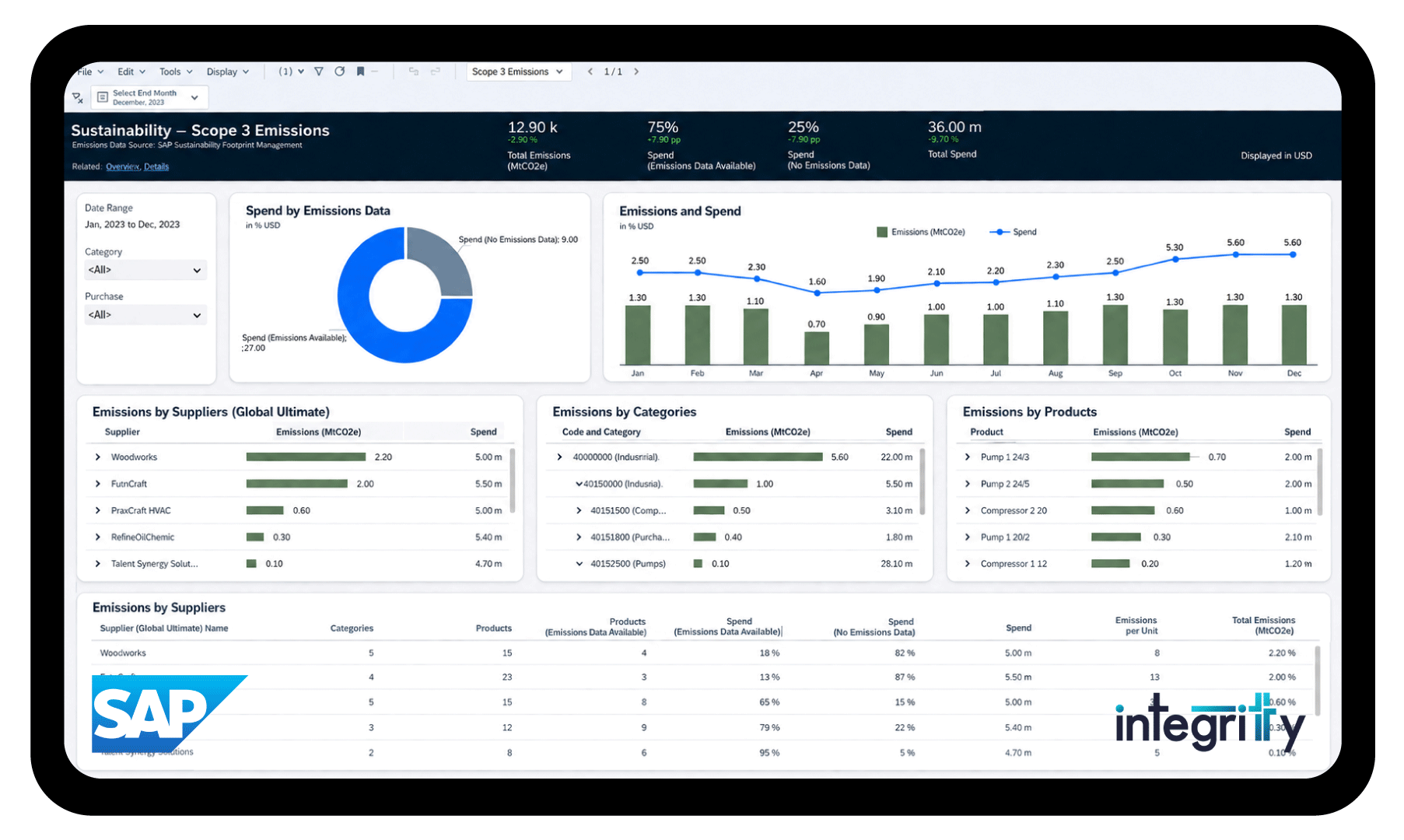
A sustainability dashboard tracking emissions by supplier and category alongside spend.
None of this replaces cost as a factor; it sits alongside it. Procurement decisions now weigh cost, risk, and sustainability together instead of optimizing for price alone, a harder calculation, but arguably a more honest one.
Procurement as a Real-Time Control Tower
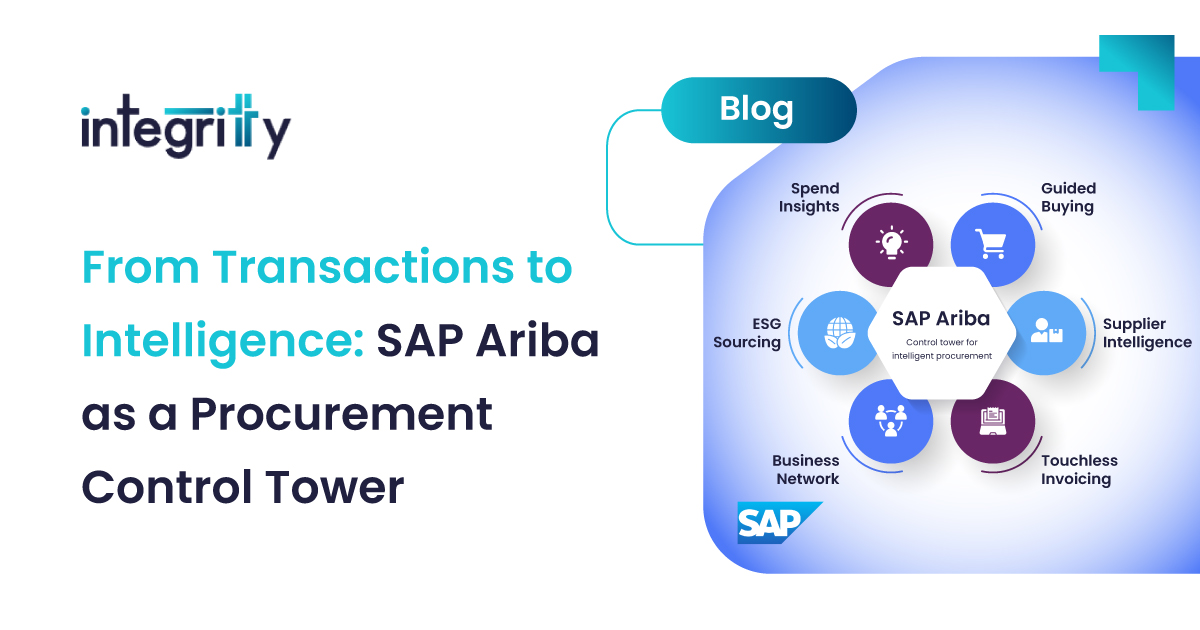
Put the pieces together and next-gen SAP Ariba looks less like a transactional engine and more like a control tower for the whole enterprise:
- Decisions guided by embedded intelligence
- Supplier management that’s continuous, not episodic
- Compliance designed into workflows instead of enforced from outside
- Procurement operating as a strategic lever for resilience, sustainability, and profitability
Organizations that get ahead of this won’t just run procurement more efficiently. They’ll get better, faster, at sensing risk and allocating spend in real time. Getting there is the harder part, and that’s usually where Integritty comes in.
Integritty's Take
We see this shift play out with clients regularly: procurement moving from a transactional function to a genuine driver of resilience and profitability. As organizations adopt next-gen SAP Ariba, we see the bigger opportunity as extending this control-tower thinking beyond procurement into the rest of the business. Our SAP S/4HANA expertise is what makes that possible, tying intelligent workflows and real-time data together across systems instead of leaving them siloed.
We do this through a clean core strategy, so businesses capture the full value of SAP Ariba without compromising the integrity of their underlying systems. AI-driven automation sharpens decision-making, streamlines compliance, and strengthens supplier relationships. Our SAP orchestration layer gives clients end-to-end visibility and control across procurement, finance, and operations, so spend is managed well today while the business builds toward something bigger.
If your procurement function still feels reactive, that’s usually a sign of where the opportunity sits, not a reason to wait.
Ready to modernize your procurement strategy? Talk to Integritty about how next-gen SAP Ariba and a clean core S/4HANA approach can turn your procurement function into a real-time control tower for growth.